
A forward-thinking, truly connected sports organisation is not one that has the most technology. It is one where the right information reaches the right person at the right time — regardless of whether they work in performance, operations, medical, or management.
Conor BransonCommercial Director EMEA, Teamworks.
For nearly ten years, I’ve spoken regularly with hundreds of operations and performance practitioners and this is what I’ve found; There’s a question I ask, and it almost always lands the same way.
“If your Head of Performance needed to factor in next week’s travel schedule when managing training load today — how long would that take?”
The answers range from “a few clicks” to “WhatsApp and a spreadsheet” to a long pause and a slightly uncomfortable laugh. What I’ve learned is that the answer to that single question tells you almost everything you need to know about the maturity of a club’s technology environment.
The clubs that answer confidently — the ones where information flows freely between Performance and Operations — aren’t just running more efficient processes. They’re making better decisions, faster. They’re developing their athletes more effectively. They’re building a structural advantage that shows up in results over time.
The silo problem is not a people problem
Let’s be clear about something: the Performance and Operations divide that exists at most clubs is not the fault of the people working in those departments. It is a structural problem, built on years of tools being bought in isolation, processes designed for one team with no thought for another, and data that sits behind walls nobody asked to build.
Your sports scientists are working in their systems. Your operations team is working in theirs. Both are doing their jobs. But those jobs are increasingly interdependent — and the infrastructure holding them apart is costing you.
As one leading Head of Performance recently put it:
“One of the most significant advances has been the improvement in internal communication. The Teamworks platform acts as a shared ecosystem where the technical, medical, nutrition, and physical preparation teams converge. This cross-functional flow of information eliminates communication barriers, ensuring that all departments are aligned under the same objectives and can act as quickly as possible whenever necessary.“
Think about the decisions that sit at the intersection of these two worlds every single week.
Travel logistics influence recovery windows. Training load decisions affect when players need to arrive and depart for away fixtures. Medical availability shapes match-day squad selection, which changes transport planning. Nutritional protocols need to be coordinated with catering at away venues. Compliance and registration deadlines cut across both departments simultaneously.
None of this is niche. All of it is operationally critical. And at most clubs, the information to make these decisions well exists somewhere — it’s just fragmented, delayed, or locked in the wrong system.
That’s the silo problem. And it doesn’t get solved by working harder. It gets solved by working connected.
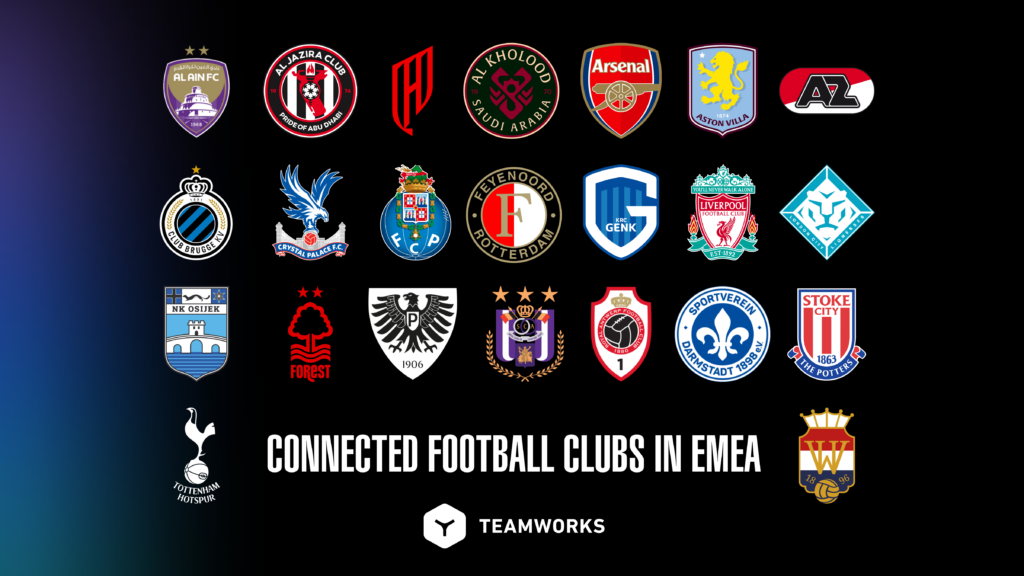
We are already helping clubs and national teams across Europe to align Operations, Athlete Management, Nutrition and Strength and Conditioning programmes into one platform.
Further afield, in the US, we partner with all 32 NFL and NHL teams, the vast majority of NBA, MLS and MLB teams – and many are leading the trend of consolidating their workflows.
What a Connected Club actually looks like
A connected club is not one that has the most technology. It is one where the right information reaches the right person at the right time — regardless of whether they work in performance, operations, or management.
It means that when a travel schedule changes, the performance staff knows immediately — not because someone remembered to send a WhatsApp, but because the systems that serve both departments are aligned and speak the same language.
It means that when load monitoring flags a concern about a player, that information can inform operational decisions — squad selection protocols, travel lists, training session planning — without requiring a chain of manual communication that introduces delay and the risk of something getting lost.
It means that your operations team isn’t rebuilding information that your performance team already has. It means your coaches aren’t making decisions based on data that was accurate yesterday but hasn’t been updated. It means everyone in the building is working from the same picture.
This is what Teamworks is built to enable. Not another silo. A platform where Performance and Operations converge — where the athlete is at the centre and every department that touches that athlete’s day is working from shared, real-time information.
As seasons draw to close across EMEA, now is the time to review what you’ve got.
The end of a season is the natural moment to examine whether your technology is actually serving your ambitions. Here’s what a structured, honest review looks like:
1. Where are the gaps between Performance and Operations?
Map the decisions that require information from both sides. Travel and load management. Medical clearance and squad planning. Nutritional protocols and matchday logistics. For each one, ask: how does information currently move? How long does it take? What can go wrong? Those gaps are the starting point for building a connected environment.
2. Are your workarounds showing you where the real problems are?
Workarounds are the most honest signal in any technology review. When staff build parallel spreadsheets, send WhatsApp messages to compensate for a platform that doesn’t work cross-functionally, or manually export data from one system to feed into another — that is your tech stack telling you it isn’t connected enough. Ask your people directly:
“When did you go around the system this season rather than through it?“
3. Can you distinguish a people problem from a platform problem?
Underutilised tools are often blamed on the platform when the real issue is implementation or change management. But there is a category of problem that genuinely is a platform issue: when a tool was never designed to connect with the workflows of another department. Before replacing anything, be honest about which problem you actually have. If you have a platform that works well for one department in isolation but creates friction for everyone else, that’s a structural issue no amount of training will resolve.
4. What decisions has your tech actually changed?
Not what data it captures. Not how many users are logged in. Decisions. Can your performance team point to a specific call — a training session modified, a travel plan adjusted, a player managed differently — that was made better because of how information was shared across your organisation? If the answer is consistently “not really,” the infrastructure for connected decision-making doesn’t exist yet.
5. Are you building toward connection or just replacing one silo with another?
This is the critical question for any club that is actively investing in new technology. A new performance platform that doesn’t integrate with your operations tools isn’t progress — it’s a more expensive version of the same problem. The standard for any new investment should be: does this bring us closer to a single, connected view of our athlete and our organisation, or does it add another wall?
The Competitive Advantage Nobody Talks About
The clubs that are building genuinely connected environments — where Performance and Operations share a common platform, where decisions can be made with full context rather than partial visibility — are building a structural advantage that compounds over time.
An athlete who is managed with full visibility across their load, travel, medical, and schedule information is better prepared for performance. A coaching staff that can make training decisions with real-time operational context makes fewer avoidable errors. An operations team that isn’t spending time on disconnected systems has bandwidth for higher-value work.
None of these advantages are dramatic in isolation. Together, over a season, they are significant. Over multiple seasons, they are transformational.
Teamworks exists because the most forward-thinking teams in the world recognised this before their rivals did. The question for every club reviewing their tech stack this off-season is simple:
“Are you building a connected club, or are you maintaining a collection of silos and hoping the difference doesn’t show up in results?”
The End-of-Season window is the moment
The window between seasons is short. It is also the best opportunity you will have all year to close the gap between where your technology is and where it needs to be.
We’re already planning next season with several clubs across EMEA, if you would like to discuss aligning your club’s departments, please get in touch, it would be great to chat.
Conor Branson, Commercial Director, EMEA