
















The Future of AI in Sports Is Not What You Think It Is
July 27, 2026 · Read Time: 14 mins
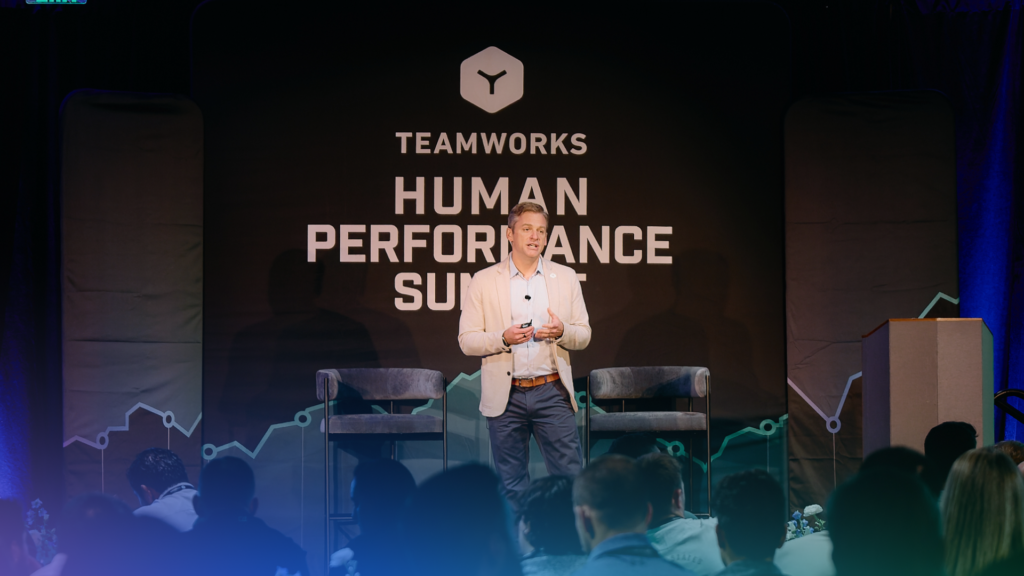
By Reed Shaffner, Chief Technology Officer at Teamworks
I opened my session at our annual Human Performance Summit this year with a show of hands. Daily ChatGPT, Claude, or Gemini users? Most of the room. Built an agent? A lot of hands. Still using the agent they built? Fewer. How many have built an application that’s running in production using AI? Three hands remained up.
Three. In a room full of the most sophisticated performance organizations in the world.
That gap between experimenting with AI and actually running it in production tells you how early we still are. The money is not waiting for the industry to catch up, though. AI in sports is projected to grow from $10.6 billion in 2025 to nearly $50 billion by 2033 [1], and most of that money will buy the same general model everyone already has access to, repackaged and resold as a sports solution. That’s not a differentiator. It’s generic technology wearing a jersey.
I run engineering for a company that builds some of this, which is exactly why I’m comfortable saying the quiet part: the model is a commodity. Everyone will have access to the same one. The edge is what sits underneath it. Whether your data is connected across every system. Whether it’s clean enough to trust before it ever reaches a model. And whether what your organization learns along the way stays yours.
That last part is the piece almost nobody in sport is talking about yet. We’ll get there.
The Hype Is Real. So Is the Problem.
Nowhere is the gap more dangerous than injury prediction. Every week there’s a new vendor promising to solve it, and I’ll say it plainly: be very, very wary of anyone selling you that today.
Two problems, and the sales deck hides both.
The first is the metric. When a vendor quotes an accuracy number, ask what that number is actually measuring, because injuries are rare events and rare events make accuracy nearly meaningless. On any given day, the odds that a specific athlete suffers a soft-tissue injury are a few percent at most. A model that predicts “healthy” every single day for every athlete on your roster scores above 95% accuracy and helps nobody. The questions you actually want answered are boring and specific. Of the injuries that did happen, how many got flagged in advance? Of everything flagged, how often was it a false alarm? And when the system flagged someone, what did you actually do differently? False alarms are not free. Every one is a healthy starter held out of training and a head coach who trusts the system a little less. If the vendor squirms on those three questions, the accuracy figure is marketing.
The second problem is the data itself. These models have never seen your athletes’ sleep quality, off-field habits, stress, relationships, or nutrition history. They have never seen a complete longitudinal picture of anyone. And yet they will tell you, with full confidence, that a hamstring is at risk on Saturday. They are confidently wrong. Not because the models are bad, but because the data underneath them is incomplete.
Now compare that to a league that did the unglamorous work first. The NFL’s Digital Athlete platform, built on years of integrated player data, was associated with a 17% reduction in concussions and 700 fewer injury-related absences in a single season [2]. Same category of problem, completely different outcome, and the difference wasn’t a smarter model. It was a league willing to spend years building the foundation before asking a model to do anything with it.
I’m not trying to talk you out of AI. Our job, yours as practitioners and mine as a technologist, is to use it where it actually works and hold the line everywhere else. The teams that figure out where that line is will have a real advantage.
It Was Never the Model
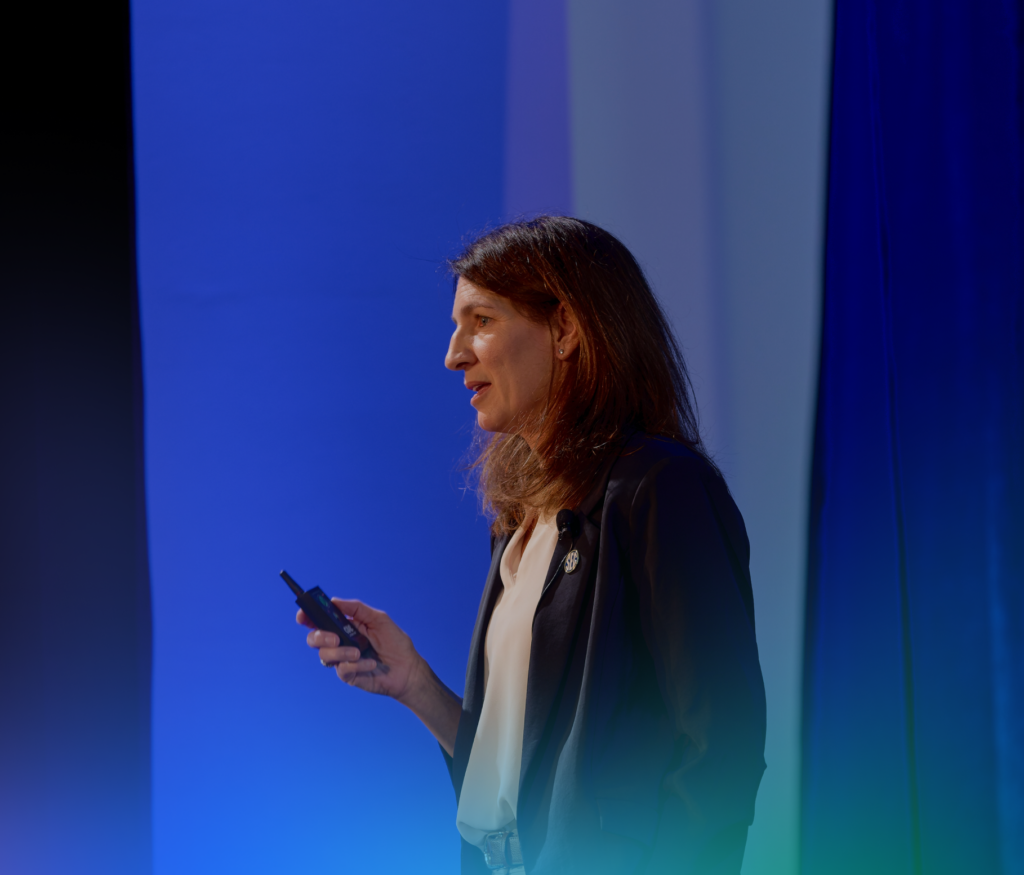
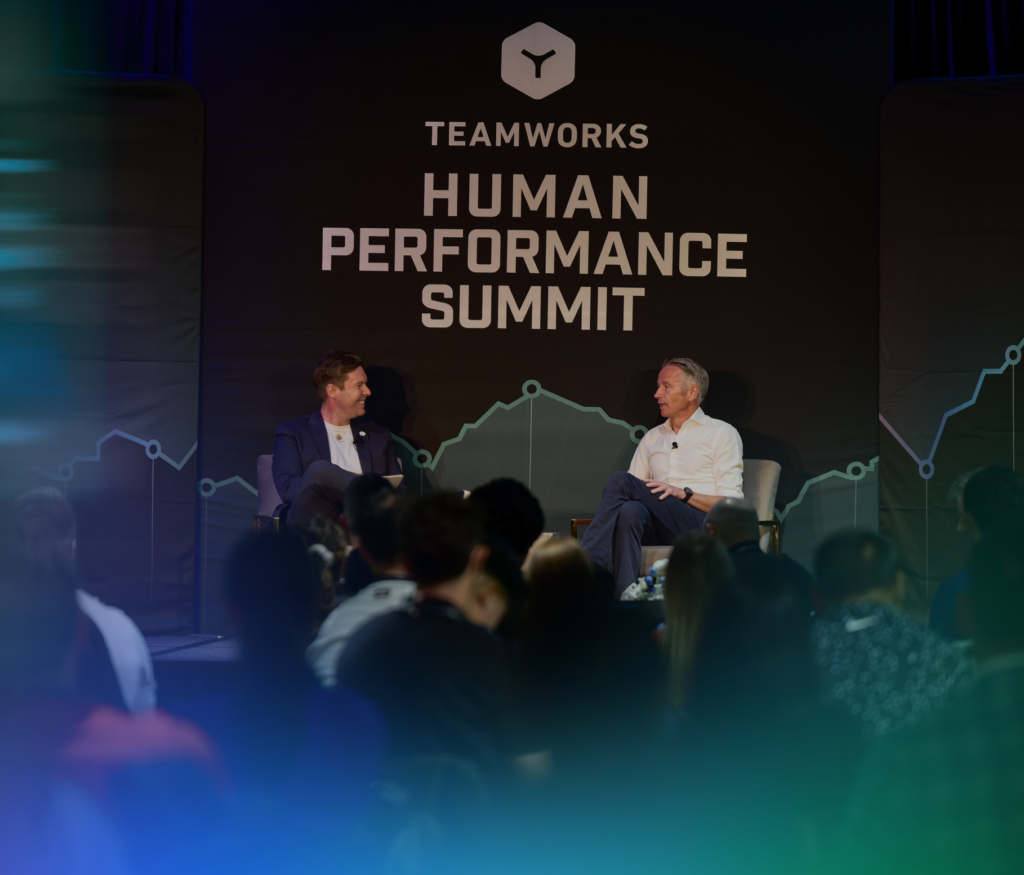
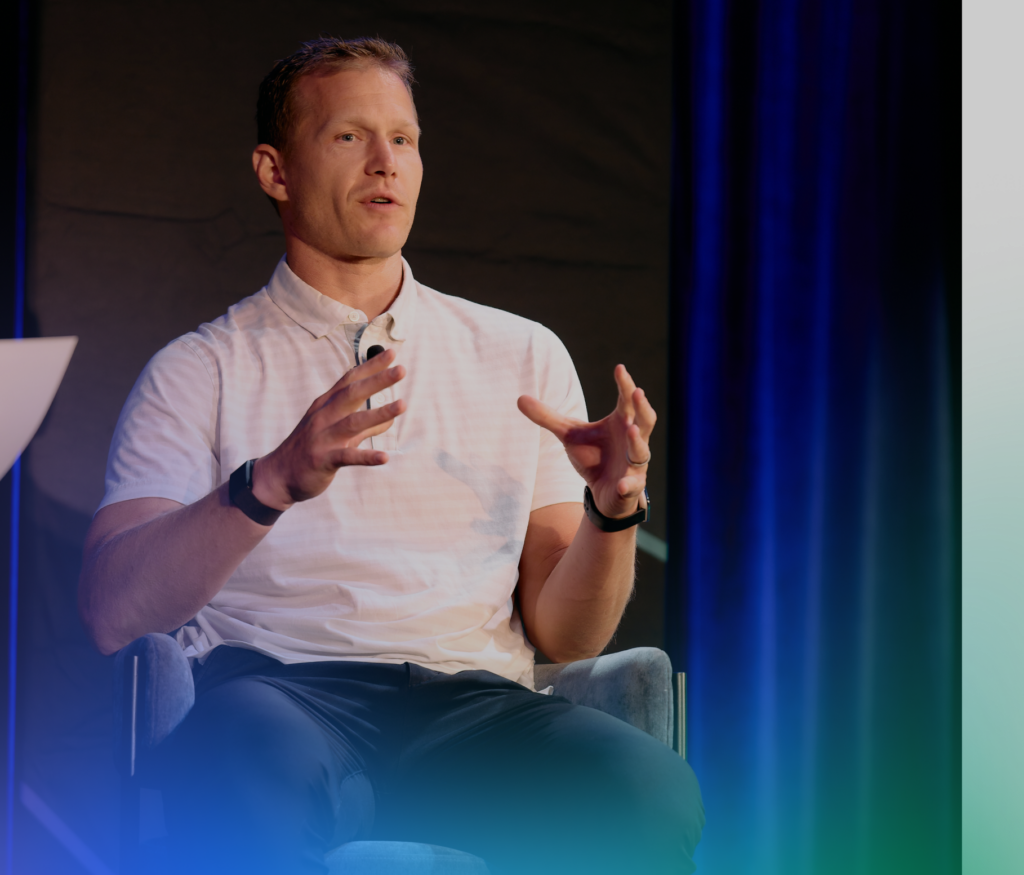
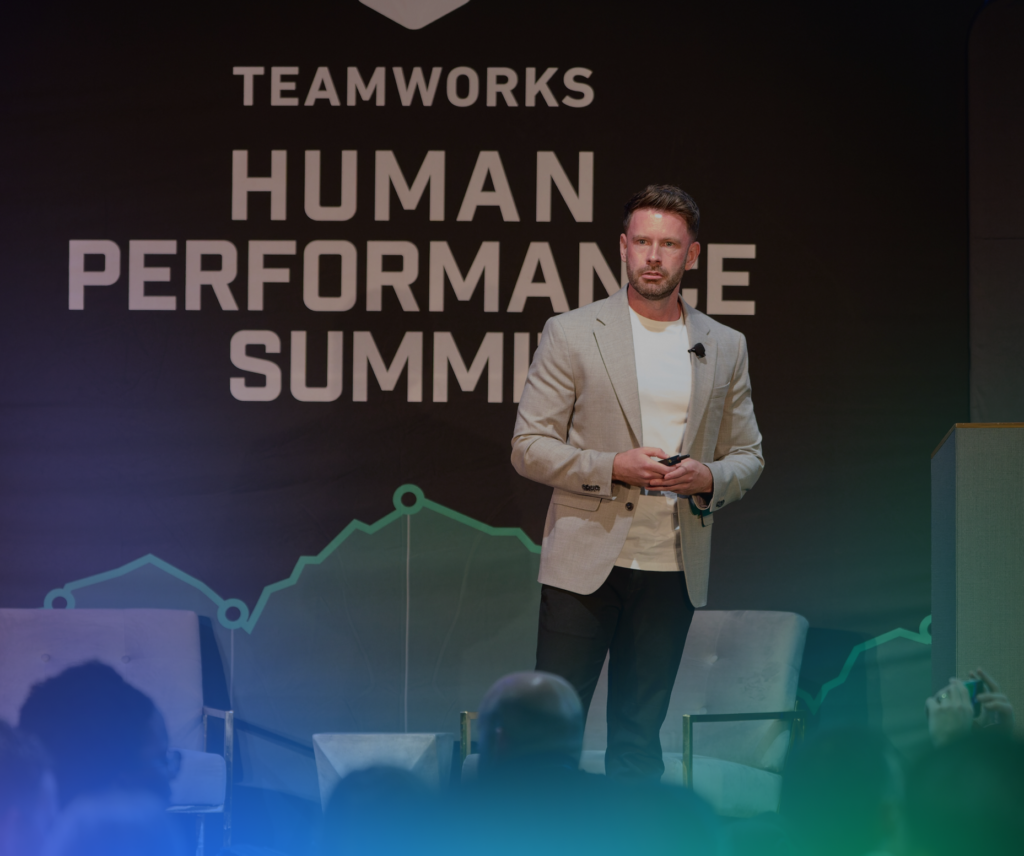
At the summit I compared notes with practitioners from Olympic programs, the Premier League, Red Bull, Nike, and the SEC. Independently, they had all landed in the same place: the problem isn’t the model. It’s what’s underneath it.
Jordan Troester, who runs Red Bull’s Athlete Performance Center, put it better than I could: “Data for data’s sake doesn’t accomplish anything. We want to use information to make better decisions.” Then he said the thing that cuts to the core: “If you start with a technology and then try to find the application somewhere, you’re always fighting that battle of trying to get buy-in.” [3] That’s the trap. Start with the question you need to answer, then figure out whether AI helps.
Dr. Robin Thorpe, a decade at Manchester United, took it further. After 150+ exploratory studies linking training load to injury risk, the field is, in his words, “none the wiser.” [4] A hundred and fifty studies. That’s not a failure of effort. That’s a sign we’ve been asking the data the wrong question. He also shared survey data from 21 elite performance and medical directors: somewhere between 75 and 90% of the data they collect never influences a single decision. [4]
Sit with that number. Three-quarters of what your team collects every day goes into a system and does nothing. It never reaches the practitioner who needed it at the moment they needed it. This is actually where AI earns its keep, not by predicting injuries, but by pulling signal out of that noise and putting it in front of the right person at the right time.
But surfacing signal only works if you trust what’s underneath it, and that’s where Dr. Catherine O’Neal’s story landed hardest for me. She leads the SEC’s 16-school unified medical program, and she said something I’ve quoted to our product team more than once because it’s exactly the failure we’re trying to build our way out of: “We love to buy 15 different programs and then hope that some person who’s really supposed to be taking care of athletes at a bedside can go in the middle of the night and put all that data together, usually in an Excel spreadsheet.” [5] She calls it horror. She’s right. That’s an infrastructure failure, and you cannot put AI on top of an infrastructure failure and expect it to work.
The USOPC’s Fin Kirwan made the same point from the biggest stage there is. The US team’s record performance at Milan Cortina didn’t come from plugging in a model. It came from having data they had never had before, at a quality they had never had before, built and planned over years, inside their own walls. Medals in 12 of 17 winter disciplines. The most golds the US has ever won at a Winter Games. The best US performance outside North America in 132 years. [6]
Four experts, four corners of the sport world, same conclusion, no comparing of notes: get the question right, trust the data underneath it, and the model becomes almost beside the point.
You’re Paying for Intelligence Twice
There’s a second reason the foundation matters, and I think sport may spend the next five years learning it the hard way.
Satya Nadella recently described what he calls the Reverse Information Paradox [7]. The economist Kenneth Arrow observed decades ago that selling information is paradoxical: to prove its value you have to reveal it, and once revealed, it’s given away. Nadella’s point is that AI flips this on the buyer. Now you give away knowledge just to use what you bought. You pay for intelligence twice, once with money and again with the proprietary knowledge you have to feed the model to make it useful. The better you want it to perform, the more you have to feed it.
Read that back in sports terms. Your return-to-play protocols. The scouting heuristics your best evaluator has spent twenty years sharpening. The correction your performance director makes when a model’s load recommendation is wrong for a specific athlete, because she has known that athlete for four years and the model has known him for four weeks. Nadella calls this intelligence exhaust, and it is exactly the knowledge a competitor could never buy. When your staff pipes athlete data and program knowledge straight into a general-purpose chatbot, and I promise you someone on your staff is doing this right now, that knowledge leaves the building one prompt at a time. And no, cleaning the data first doesn’t save you. A tidy dataset handed to a general provider isn’t protected. It’s just easier to digest. Even under enterprise agreements where the provider isn’t training on your data, there’s a quieter failure: nothing your organization learns accumulates anywhere you control. It evaporates at the end of every session.
Alex Karp has made the same argument from the builder’s side. Sophisticated customers “want to know they own the means of production” [8]: their models, their data stack, their alpha. A core part of Palantir’s answer to that problem has a name worth borrowing even though it sounds like it escaped from a philosophy department. They call it an ontology.
Here’s what an ontology means in our world, stripped of the jargon. Right now, one of your athletes lives in five systems. The GPS platform, the force plates, the EMR, the strength and conditioning sheet, the video tool. As far as your data is concerned, that’s five different people. An ontology is what makes them one athlete again: one identity, resolved across every system and every season of a career, plus the map of how everything connects. This GPS session belongs to that athlete. It produced this load, which your sports scientist flagged, which the physio’s treatment note references, which shaped the availability call the head coach made on Friday. And it holds your program’s definitions, not anyone else’s. What counts as a high-speed effort. What “cleared for contact” actually requires. What a red flag on a wellness questionnaire triggers, and who gets told.
If you’re a practitioner, the ontology is why “who’s trending toward overload going into the weekend” gets answered with your definitions and your thresholds instead of a generic model’s guess at what those words might mean. If you’re a technologist, it’s canonical identity, a governed semantic layer, and conformed definitions sitting between the raw data and the model. Same thing, two vocabularies. Either way, the ontology is where your institutional knowledge lives, and it lives on your side of the boundary.
That’s what the future of AI in sport actually looks like. Not a general model with a sports skin on it, but a specialized layer sitting between your organization and whatever frontier models exist, with the models plugging in underneath as interchangeable engines. If one gets taken away tomorrow, your intelligence remains, because it was never stored in the model. It was stored in the layer you own.
The teams that build or buy that layer get smarter every season. The teams piping their knowledge into general intelligence are subsidizing everyone else’s.
Your Data Is Your Edge and Your Liability
As your data gets more valuable, protecting it gets less optional. And protection means two different things: keeping athlete and medical information locked down, and being able to trust what shapes the recommendations coming back out.
The first is straightforward. Sensitive data does not become less sensitive because AI is using it. Before you give any vendor access to athlete, medical, or performance information, ask four questions. Where does my data live? Who can see it? What are you allowed to do with it? And who owns what the system learns from my usage? That fourth question is the new one, and most vendors are not ready for it. If they can’t answer all four cleanly, be careful. Don’t hand over data, or institutional knowledge, that you wouldn’t want compounding on someone else’s balance sheet.
The second problem is trust in the output itself. At the summit we walked through a case where security researchers invented a medical condition out of thin air, fake symptoms, fabricated research papers and all, published it, and watched AI models pick it up. Those models started telling real people asking about real symptoms that they had a condition that never existed. [9]
Nobody hacked anything. The models just believed what they read. If an AI system is drawing on information you can’t verify, it will turn bad evidence into recommendations that sound completely credible.
In sport, that could mean flawed guidance on injury risk, training load, or recovery. So the real test isn’t whether the model can produce an answer. It’s whether you can trust what’s behind it, and that’s only possible when the system reasons over data you govern. Not the open internet’s. Not another team’s. Yours.
The Bottom Line
AI is not a strategy. It’s an engine. We still need you in the room, making the calls, building the relationships, earning the trust of the athlete who’s deciding whether to tell you about the thing happening off the field that no model will ever see.
The future of AI in sport belongs to whoever did the unglamorous work first: connected the data, protected it, and built the boundary that keeps institutional knowledge compounding inside the organization instead of leaking out of it.
The edge was never going to be the model. The model is rented. The edge is everything you own underneath it.
About Teamworks
Teamworks is the leading operating system for elite sports, trusted by more than 7,000 organizations worldwide. The company combines enterprise SaaS software with proprietary data and advanced analytics to deliver intelligent products that power player evaluation, game strategy, performance development, and daily operations. By unifying workflows, video, and trusted data sources into a single AI-driven platform, Teamworks serves as both the technology backbone and the intelligence engine for modern sports organizations. Founded in 2004, Teamworks has expanded its data and AI capabilities through strategic acquisitions including Zelus Analytics, Telemetry Sports, Sportlogiq, and the enterprise business of Pro Football Focus (PFF). Learn more at teamworks.com.
About Teamworks AI
Teamworks AI is built for the game, not the hype. It is not a standalone feature bolted onto a general model. It is the specialized intelligence layer that becomes possible when an entire sports organization runs on a single connected platform: athlete identity resolved across every system and throughout a career, data moving through a quality pipeline before it ever reaches a model, and a trust boundary that keeps your organization’s data, context, and learning compounding inside your walls no matter which engines power the intelligence underneath. The more connected the ecosystem, the greater the edge. Not from a better model, but from a foundation you own. Learn more at teamworks.com/ai.
Sources
- Global AI in sports market size and growth, $10.6B (2025) to $49.9B (2033), 21.6% CAGR: Grand View Research, AI in Sports Market Report; Fortune Business Insights, AI in Sports Market.
- NFL Digital Athlete platform results, 17% year-over-year concussion reduction (2024) and 700 fewer injury-related absences (2023): NFL x Amazon Web Services Fact Sheet, NFL.com; How AI Helped the NFL Cut Concussions by 17% in 2024, SUCCESS.
- Jordan Troester (Head of Performance, Red Bull Athlete Performance Center): Teamworks Human Performance Summit, session transcript.
- Dr. Robin Thorpe (Director, Sports Performance, Science & Innovation; formerly Manchester United and Red Bull): Teamworks Human Performance Summit, “Ready to Perform: Building Systems That Tell You the Truth About Your Athletes,” session transcript.
- Dr. Catherine O’Neal (Chief Medical Advisor, SEC; former CMO, Our Lady of the Lake): Teamworks Human Performance Summit, “Teamworks AMS & SEC Conference Partnership,” session transcript.
- Fin Kirwan (SVP & Chief of Olympic Sport, USOPC): Teamworks Human Performance Summit, “Built for the Moment,” session transcript. Milan Cortina medal count, gold medal record, and historical performance context stated by session moderator in the same panel.
- Satya Nadella, “The Reverse Information Paradox,” sn scratchpad, July 2026. snscratchpad.com/posts/reverse-information-paradox.
- Alex Karp (CEO, Palantir), remarks shared via Palantir (@PalantirTech) on X.
- Security statistics and the data-poisoning case study: Reed Shaffner, Teamworks Human Performance Summit keynote, “The Future of AI in Sports,” session transcript.
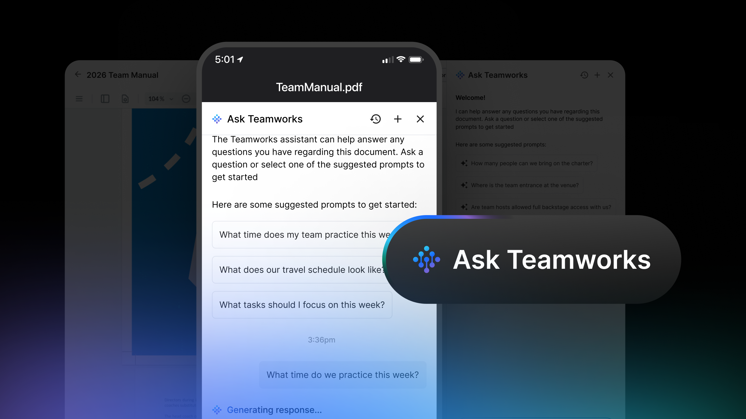
How the NCAA Found Clarity in the Chaos of March Madness
See how the NCAA used Ask Teamworks to get instant, citation-backed answers to policy, travel, and protocol questions during March Madness.
TCU Selects Teamworks Player Personnel
TCU Football adopts Teamworks Player Personnel to unify self-scouting, advanced scouting, and transfer portal evaluation into one platform, giving AGM Tyler Olker's growing staff a faster, more precise way to build a roster built for the Big 12 and beyond.
How Al Ain FC Built a Historic Double-Winning Season — and the Technology Behind It
See how Al Ain FC used Teamworks software — Hub, AMS, S&C and Nutrition — to complete an unbeaten title-winning season.